100% Certified & Lab-Tested Products – Shop with Confidence.
Ceylon Blue Sapphire (Neelam): The Complete Mine to Market Guide
Sri Lanka (Ratnapura) • Cornflower Blue • No Heat • GRS / GIA Certified
INTRODUCTION
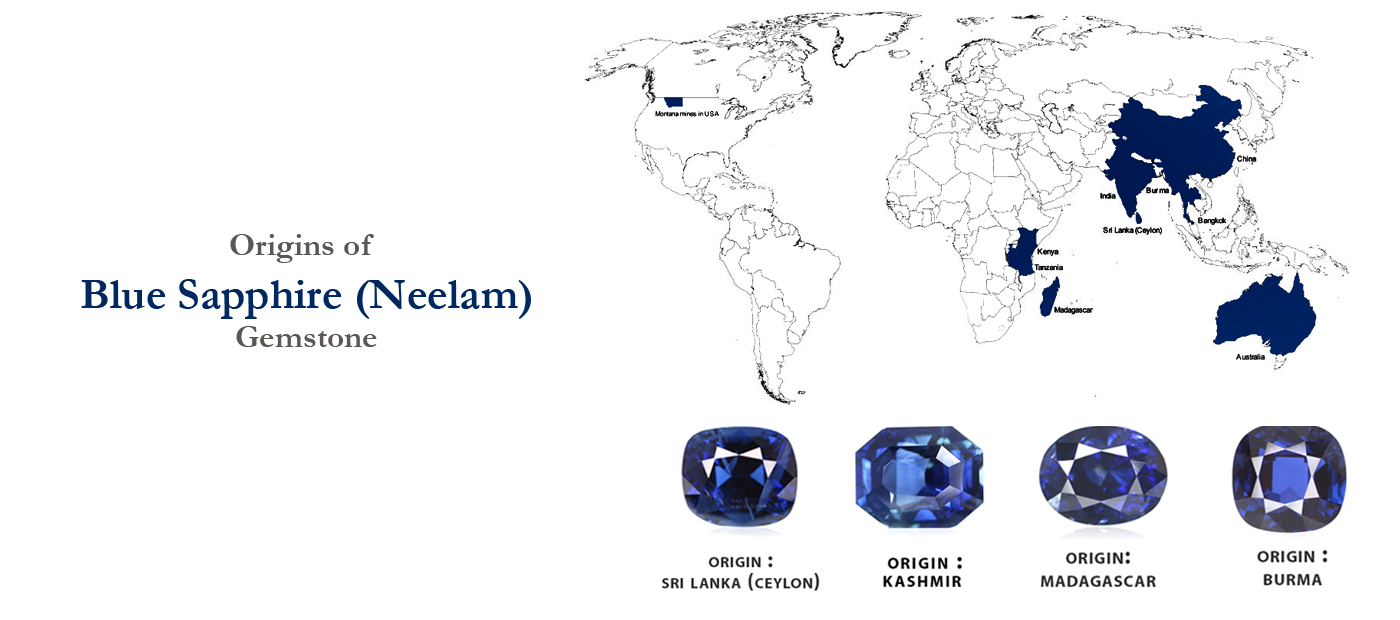
Sri Lanka has been called the Isle of Gems for over 2,500 years — and for good reason. The island's Ratnapura district, whose very name means City of Gems , supplies over 85% of the world's finest blue sapphires. Known in Vedic astrology as Neelam — the Ratna of Shani (Saturn) — a genuine Ceylon sapphire is among the most powerful and sought-after gemstones in both the investment and astrological worlds.
In this complete guide, we take you through every stage of a Ceylon sapphire's journey — from the alluvial mine pits of Ratnapura to a certified stone on your finger — so you can buy with total confidence from Mauhurtika Gems.
85% of world sapphires from Sri Lanka | 2,500+ years of mining history | 98%+ of market sapphires are heat treated | $625K per carat — world auction record |
Every Ceylon sapphire begins its life in the gravel beds of the Ratnapura district in south-western Sri Lanka, along the banks of the Kalu Ganga river. Miners dig alluvial pit mines 10 to 40 metres deep, hauling up a gravel layer called illam — the gem-bearing stratum that sits between the topsoil and the crystalline basement rock below.
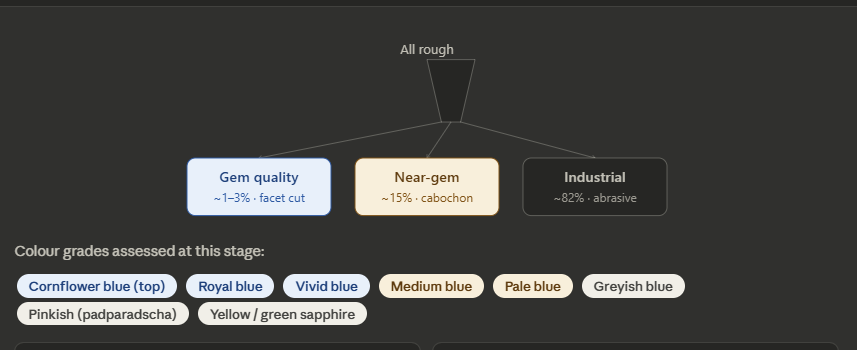
The illam is carried to the surface in rattan baskets, then washed in river water. Workers sift through the gravel by hand, separating gemstones by weight and density. Of all the material excavated, only approximately 1 to 3 percent reaches facet-grade gem quality. The rest goes to cabochon cutting, industrial abrasive use, or is discarded.
Sri Lanka's low-iron metamorphic geology is the reason Ceylon sapphires show a uniquely clean, vivid blue — the same iron-poor host rock that gives Mogok rubies their fluorescent red. No other deposit reliably produces this quality. — GRS Gem Research Swisslab — origin research notes |
Once extracted, rough sapphires are assessed by experienced Ratnapura gem traders — many of whom have been in the business for generations. The key factors evaluated at this stage are colour tone, saturation, hue, transparency, and size.
For Vedic astrology (Jyotish), a stone must be eye-clean — no visible inclusions to the naked eye — with a true blue colour, free from grey or greenish tones. Colour is the single most important factor for astrological prescription. |
After rough sorting, gem-quality sapphires are sent to cutters — either local Ratnapura workshops or larger Bangkok cutting factories for stones destined for international markets.
Sapphire is a strongly dichroic gemstone, meaning it shows different colours depending on which crystal axis is viewed. A sapphire viewed along its c-axis appears blue, while the same stone viewed across the c-axis can appear greenish or pale. Skilled Ceylon cutters orient each stone so the richest blue faces upward through the table facet — the most visible part of the finished gem.
Preferred cuts for Ceylon sapphire: Oval brilliant, cushion cut, and round brilliant. All three maximise colour visibility and retain the most carat weight from the rough.
This is the stage most buyers do not see — and the one that has the greatest impact on both value and astrological suitability. Over 98 percent of all blue sapphires sold worldwide have been heat treated. Stones are placed in a furnace at temperatures of 1,400 to 1,800°C in an oxidising atmosphere for 12 to 24 hours.
The heat dissolves the fine rutile silk inclusions inside the stone, deepens and saturates the blue colour, and improves overall clarity. The result looks dramatically better — but the treatment is permanent and scientifically detectable by any qualified gemological laboratory.
At Mauhurtika Gems, every sapphire listing clearly states Heated (H) or No Heat (NH) status — verified by an independent gemological laboratory before the stone is listed for sale. We never misrepresent treatment status. |
A gemological certificate from a recognised laboratory is not merely a piece of paper — it is the difference between buying a stone with confidence and taking a blind gamble. For Ceylon sapphires, three laboratories are considered the gold standard worldwide:
GRS (Switzerland) | GIA (USA) | Gübelin (Switzerland) |
|---|---|---|
Issues 'Cornflower Blue' and 'Royal Blue' colour designations for Ceylon origin. Most prestigious certificate for top-tier sapphires. Required by leading auction houses worldwide. | The globally recognised standard, required by Sotheby's and Christie's. Provides detailed origin confirmation and heat treatment analysis. | Uses photoluminescence mapping and nano-inclusion analysis — the most advanced provenance science available. Preferred for exceptional Ceylon stones. |
A 'Ceylon, No Heat, Cornflower Blue' GRS certificate on a 3 carat stone can push its per-carat price from approximately $1,500 to $12,000 or more. For buyers seeking a sapphire for Jyotish use, the certificate also confirms the stone is genuine corundum — not glass, synthetic, or diffusion-treated — which is critical for any astrological application.
Need help choosing the right certified sapphire for your horoscope? Book a free gemstone consultation at Mauhurtika Gems.
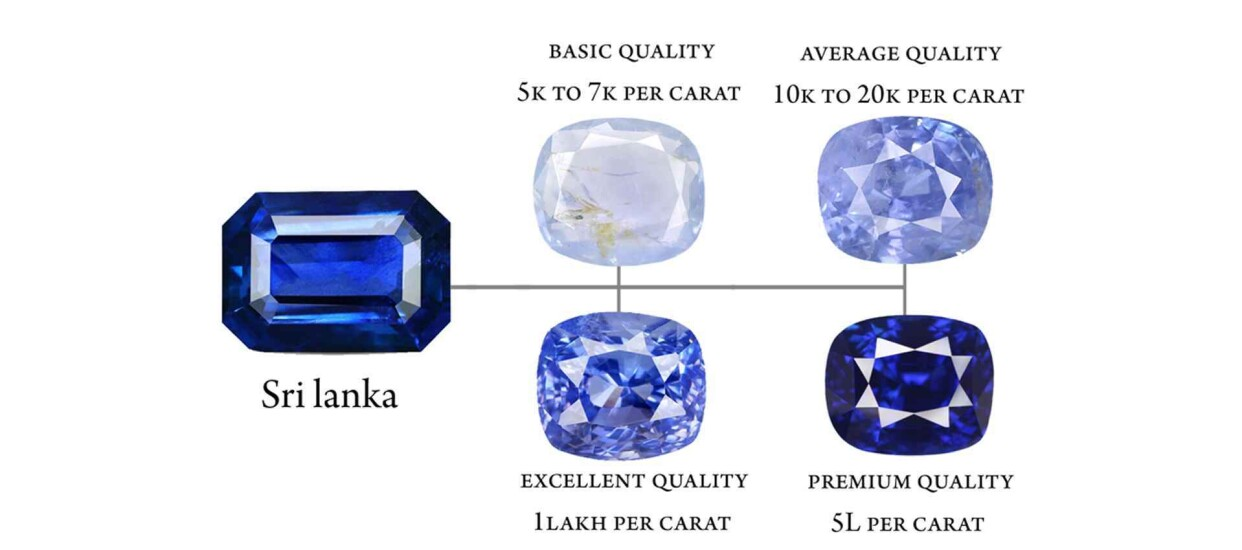
The table below reflects approximate international wholesale and retail per-carat values for Ceylon sapphires. Indian retail prices in INR vary based on the prevailing USD/INR exchange rate, import duties, and setting or shipping costs.
Origin/Type | Colour Grade | Treatment | Certificate | USD / Carat | INR / Carat (est.) | Tier |
|---|---|---|---|---|---|---|
Ceylon (Sri Lanka) | Cornflower / Royal blue | No Heat (NH) | GRS / GIA | $10,000–$50,000 | ₹8.5L–₹42L+ | Investment |
Ceylon (Sri Lanka) | Vivid blue, eye-clean | No Heat (NH) | GRS / GIA | $3,000–$15,000 | ₹2.5L–₹12.5L | Collector |
Ceylon (Sri Lanka) | Vivid–med blue | Heated | GRS / GIA | $500–$4,000 | ₹42K–₹3.3L | Premium |
Ceylon (Sri Lanka) | Medium blue | Heated | GII / IGI | $150–$1,000 | ₹12K–₹84K | Standard |
Ceylon (Sri Lanka) | Pale blue | Heated | Basic / None | $30–$300 | ₹2.5K–₹25K | Entry |
Padparadscha (Ceylon) | Pink-orange | No Heat (NH) | GRS / GIA | $5,000–$30,000 | ₹4.2L–₹25L | Collector+ |
Star Sapphire (Ceylon) | Blue / black star | Heated | None / Basic | $50–$800 | ₹4K–₹67K | Trade |
* Prices are indicative reference values only. Each stone is unique — contact Mauhurtika Gems at +91-9009231652 for a personalised valuation on any specific stone.
Blue Sapphire is the Navagraha gemstone of Shani (Saturn) — the planet of karma, discipline, longevity, and justice. It is the fastest-acting stone in the Vedic system, with effects said to appear within three days of wearing. For this reason, it demands both respect and careful prescription.
Not sure whether Neelam is the right stone for your horoscope? Book a free expert consultation with our in-house gemstone and astrology advisor before purchasing.
The following table is a general Vedic reference. Individual birth charts always take precedence — always consult a qualified Jyotishi before wearing Blue Sapphire.
Rashi | Sign | Dates | Recommendation |
|---|---|---|---|
Makar | Capricorn | Dec 22 – Jan 19 | Highly Recommended |
Kumbh | Aquarius | Jan 20 – Feb 18 | Highly Recommended |
Tula | Libra | Sep 23 – Oct 22 | Recommended |
Vrishabh | Taurus | Apr 20 – May 20 | Recommended |
Mithun | Gemini | May 21 – Jun 20 | Consult Jyotishi First |
Kanya | Virgo | Aug 23 – Sep 22 | Consult Jyotishi First |
Mesh | Aries | Mar 21 – Apr 19 | Avoid — Test First |
A GRS, GIA, or Gübelin certificate confirming 'Ceylon' origin and heat treatment status is non-negotiable for any meaningful purchase. Browse only certified stones on Mauhurtika Gems Blue Sapphire collection — every listing includes the certificate details.
Blue Sapphire is the only Navagraha stone where a trial period is universally recommended before permanent wearing. Effects — positive or negative — can appear within 72 hours. Do not skip this step regardless of how confident you are in the prescription.
True cornflower or royal blue glows under sunlight. View the stone in multiple light sources — not only under the concentrated spotlights used by jewellers, which tend to flatter every stone. The colour should be consistent and true blue — not greyish, not greenish, not violet-heavy.
Lattice diffusion treatment artificially introduces colour into the outer layer of a sapphire without heating the entire body. It is a significant treatment that drastically reduces value and renders the stone unsuitable for astrological use. A reputable laboratory certificate will disclose this clearly.
Ceylon sapphire prices jump sharply at the 1, 2, and 5 carat thresholds. A certified 0.95 carat stone of equivalent quality can cost 25 to 35 percent less than a 1.05 carat stone. Knowing this allows you to maximise value without sacrificing quality.
In a market flooded with treated, synthetic, and misrepresented stones, an authentic Ceylon Blue Sapphire — correctly graded, certified, and disclosed — stands apart as one of the finest natural gemstones available. Whether you seek it for the astrological power of Shani, as a collector's investment, or as a generational heirloom, the Ceylon sapphire's combination of colour beauty, geological rarity, and 2,500 years of documented heritage places it in a category few gemstones can match.
At Mauhurtika Gems , every certified Ceylon sapphire is origin-verified, treatment-disclosed, and backed by internationally recognised laboratory reports. We also offer a free gemstone consultation to help you determine the right stone, weight, and metal for your specific horoscope — before you spend a rupee.
Shop Certified Ceylon Blue Sapphire at Mauhurtika Gems Every stone is origin-verified, treatment-disclosed, and certified before listing. Browse: mauhurtikagems.com/product-categories/blue-sapphire-neelam Call / WhatsApp: +91-9009231652 | Indore, India |
The following internal links appear in the article body. Ask your developer to ensure these are live and correctly hyperlinked in the published version:
Developer tip: Add Article schema + FAQPage schema + BreadcrumbList schema to this page. FAQ schema shows answers directly in Google search results — free extra visibility on Page 1 at no cost. |
Add these questions and short answers (2–4 sentences each) at the bottom of your page. Google shows FAQ answers directly in search results — this is free extra space on Page 1.
Ceylon Blue Sapphire, mined in Ratnapura, Sri Lanka, is widely regarded as the world's finest blue sapphire. Its low-iron host rock produces a uniquely clean cornflower blue with exceptional transparency — a colour quality impossible to replicate from any other deposit. Sri Lanka supplies over 85% of the world's gem-quality sapphires.
Yes. Ceylon Blue Sapphire (Neelam) is the most widely prescribed gemstone for Shani in Vedic Jyotish. An eye-clean, certified, natural sapphire — ideally with no heat treatment — is considered the most effective Ratna for strengthening Saturn's position in the birth chart. Always consult a qualified Jyotishi before wearing.
Over 98% of sapphires on the market are heat treated at 1,400–1,800°C to improve colour and clarity. No-heat stones are natural, untreated, and extremely rare — commanding 5 to 15 times the price of an equivalent heated stone. Heat treatment status is permanently detectable by GRS, GIA, and Gübelin laboratories. For astrological use, no-heat is strongly preferred.
A GRS certificate confirms the stone's geographic origin (e.g. 'Ceylon, Sri Lanka'), its heat treatment status (Heated or No Heat), colour grade (Cornflower Blue, Royal Blue, etc.), and basic quality details. A GRS 'Ceylon, No Heat' certificate can multiply a stone's value by 4 to 10 times compared to an uncertified equivalent.
Prices range from approximately ₹8,000 per carat for commercial-grade heated stones to ₹8 lakh or more per carat for vivid, no-heat, GRS-certified cornflower blue stones. The price depends on colour grade, carat weight, treatment status, and certification. Contact Mauhurtika Gems at +91-9009231652 for a personalised price quote.