100% Certified & Lab-Tested Products – Shop with Confidence.
Top Gemstone Testing Laboratories in India: How to Verify a Gemstone Before Buying
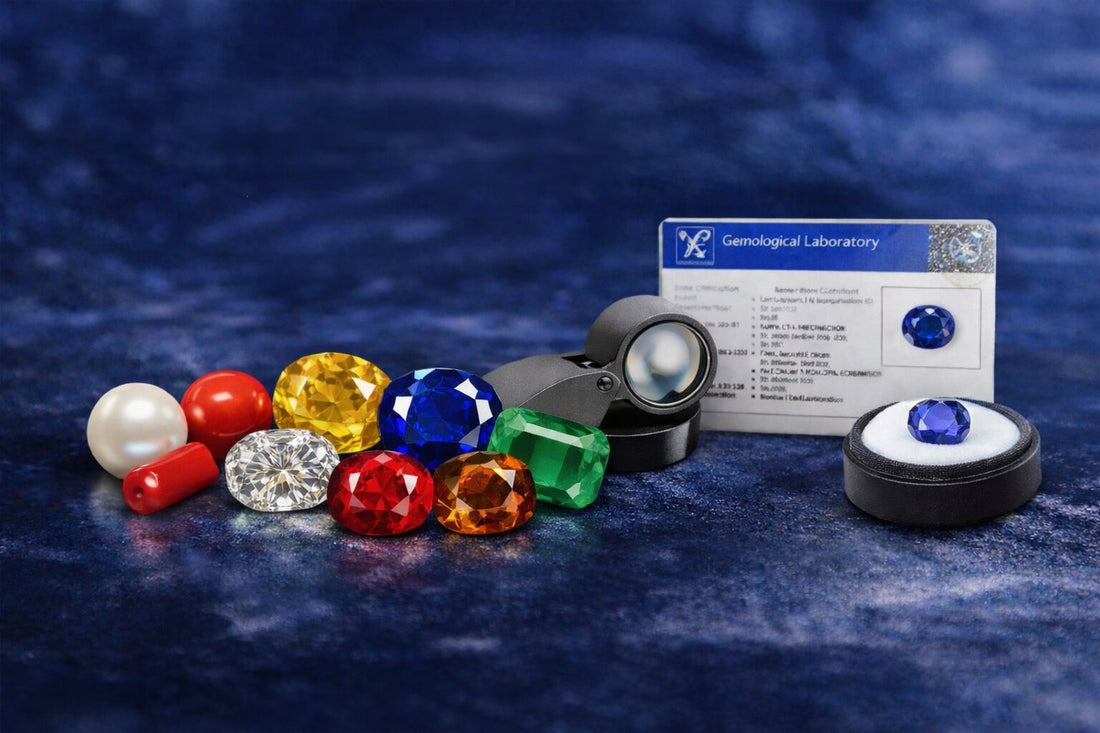
Buying a gemstone is not simply about choosing a beautiful colour or the right carat weight. When the stone is being purchased for jewellery, collection or Vedic astrology, authenticity, treatment status and identification matter just as much as appearance.
The gemstone market includes natural stones, treated stones, synthetic or laboratory-grown materials and simulants. A professional gemological laboratory can help distinguish between these categories and provide a documented report describing the stone's characteristics.
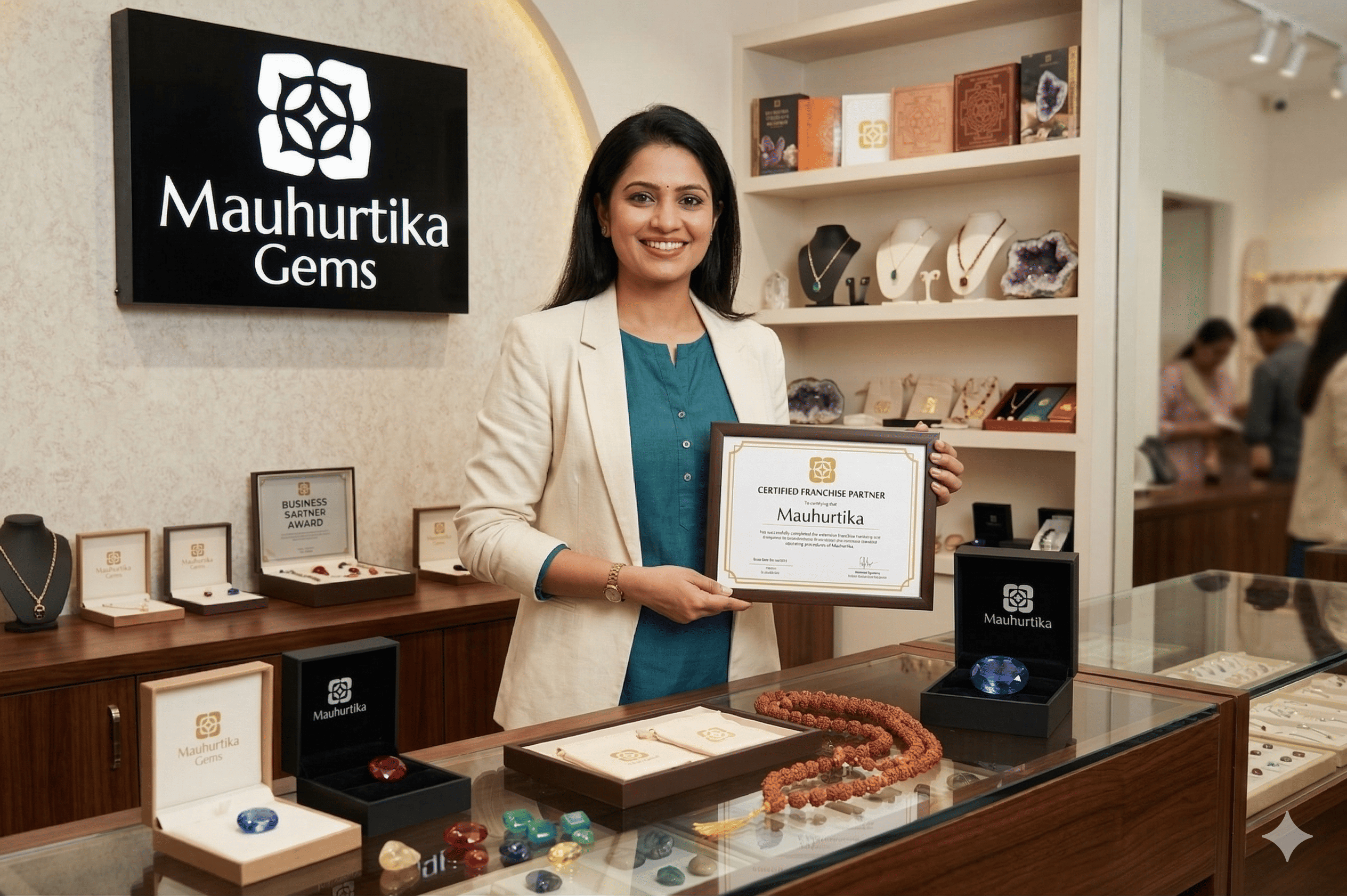
At Mauhurtika Gems, we believe that transparency should come before a purchase. Our products are presented as certified and lab-tested, helping customers make more informed decisions when choosing gemstones and Rudraksha.
In this guide, we explain some of the recognised gemstone-testing laboratories and, more importantly, what you should actually look for in a gemstone certificate.
A gemstone may look completely natural to the eye and still require professional examination to determine what it actually is.
Gemological testing can help establish:
Modern gemological laboratories use specialised equipment and scientific examination rather than relying only on visual inspection.
For example, IIGJ Lab states that its coloured gemstone reports can identify whether a stone is natural, laboratory-grown or a simulant and disclose treatments detected during examination.
A gemstone certificate is more useful when you understand what information it contains.
Depending on the laboratory and the type of examination, a report may include:
The report identifies the material being examined—for example, ruby, sapphire, emerald, amethyst or another gemstone variety.
Some reports indicate whether the material is natural or laboratory-grown.
Treatments can significantly affect the value and characteristics of a gemstone. A professional report may disclose detectable treatments.
The report can document measurements and carat weight or other relevant dimensions.
Depending on the gemstone and laboratory, the report may describe colour, transparency, clarity characteristics and other identifying features.
Origin determination is a specialised service and is not automatically available for every gemstone or every laboratory report. Some laboratories offer origin determination for selected gemstones.
For example, IIGJ Lab specifically lists origin determination for Ruby, Emerald and Blue/Pink Sapphire.
There is no single laboratory that is automatically “best” for every gemstone and every purpose. The appropriate laboratory depends on the stone, required testing, budget and type of report needed.
Here are several established laboratories and gemological institutions worth knowing.
The Gemological Institute of America (GIA) is one of the world's best-known gemological institutions.
GIA is widely recognised for its gemological research, education and laboratory services. Its work covers diamonds and coloured gemstones, with detailed examination and reporting.
For buyers dealing with higher-value gemstones, a report from a highly recognised international laboratory can provide an additional level of documentation and confidence.
International Gemological Institute (IGI) operates internationally and provides gemological laboratory services for diamonds, coloured gemstones and jewellery.
IGI has a significant presence in India and is widely known within the jewellery industry.
When evaluating an IGI report, customers should still check the exact report type and information provided, rather than assuming every report offers the same level of analysis.
The Gemmological Institute of India (GII) has a long history in Indian gemology.
Its laboratory services include gemstone identification and related gemological work. GII also operates in the areas of research and gemological education.
Its official website describes services including identification and treatment certification and gemstone and jewellery grading services.
IIGJ Lab is associated with the Gem & Jewellery Export Promotion Council (GJEPC).
The laboratory provides testing and analytical reports for gemstones, diamonds, pearls and jewellery. Its current laboratory information highlights technologies including LA-ICP-MS, FTIR and Raman spectroscopy.
IIGJ Lab also offers:
Its laboratories and collection centres operate in multiple Indian locations.
Mewar Gem Testing Laboratory is based in Udaipur, Rajasthan, an important centre for India's gemstone trade.
The laboratory provides gemstone testing and certification services and is another option that buyers and jewellery businesses may consider when looking for professional gemstone identification.
The original source article also lists MGTL among the major gemstone-testing laboratories in India.
IGITL is based in Jaipur's Johari Bazar area and provides gemstone testing and certification services.
The laboratory is listed by the source article as an ISO-accredited facility offering gemstone examination and reports covering characteristics such as colour, clarity and weight.
Pangem operates from Pune and provides gemstone testing and certification services.
The laboratory also works in gemological education and training. It can be another option for buyers or businesses looking for professional gemstone identification and documentation.
The Asian Institute of Gemological Sciences (AIGS) is based in Bangkok, Thailand rather than India.
It is nevertheless relevant when discussing internationally recognised gemological institutions in the region.
AIGS provides gemstone and pearl examination and is known for its gemological education and laboratory work.
International Gemological Laboratories is another laboratory listed in the source article for gemstone testing and certification.
When considering any laboratory report, buyers should verify the laboratory, report number and exact scope of the report rather than relying solely on the presence of the word “certified.”
The American Gem Society (AGS) is a well-known US-based organisation in the jewellery and gemological sector.
It is not an Indian testing laboratory, but it is relevant to international gemstone and jewellery standards and certification discussions.
You don't necessarily need the most famous laboratory for every purchase.
Instead, consider these factors.
Different stones require different examination methods.
A test suitable for one gemstone may not provide the same information for another.
Do you only need identification?
Or do you need:
Choose the report according to your requirement.
Independent laboratory examination can provide greater confidence because the laboratory's role is to analyse and report on the material rather than sell the gemstone itself.
Look for:
This is extremely important.
The certificate should correspond to the actual gemstone being sold.
This is one of the most important questions buyers should understand.
A seller-issued certificate is documentation provided by the seller or their associated testing process.
An independent laboratory report comes from a separate gemological laboratory that examines the gemstone and issues its own report.
Neither should be judged only by the word “certificate.”
Instead, look at:
Who tested it?
What was tested?
What does the report actually state?
Can the report be verified?
That is much more useful than simply seeing a “Certified” badge on a product page.
No.
A certificate is evidence of the examination described in the report. It does not automatically mean that the gemstone is rare, premium quality or worth a particular price.
Two natural gemstones of the same species can have significantly different:
Therefore, certification and valuation are not the same thing.
Before purchasing, check:
Make sure the identified gemstone matches what you are buying.
Understand whether the report identifies the stone as natural, laboratory-grown or another material.
Check whether heating, filling, dyeing, diffusion or other treatments are disclosed where applicable.
Verify that the report information corresponds to the actual stone.
Check whether the laboratory provides a way to verify the report.
A trustworthy seller should be willing to explain what certification the gemstone carries.
For customers purchasing gemstones for Vedic astrology , authenticity becomes particularly important because the gemstone is selected based on specific astrological considerations.
Whether you are considering:
you should first understand what material you are actually buying.
Certification doesn't replace astrological guidance, but it can provide useful documentation about the gemstone itself.
At Mauhurtika Gems, our focus is on making gemstone and Rudraksha buying more transparent and informed.
Our website offers lab-tested and certified products , alongside categories covering natural gemstones, Vedic gemstones, Rudraksha and gemstone bracelets.
We believe customers should not have to rely only on claims such as “original,” “natural” or “genuine.”
Instead, customers should be able to understand:
What is the gemstone?
What has been tested?
What certification is available?
What are its characteristics?
And what exactly are they purchasing?
That transparency is an important part of a trustworthy gemstone-buying experience.
Gemstone certification is not simply a marketing label. A properly documented gemological examination can help buyers understand the identity and characteristics of a gemstone and, where applicable, disclose treatments or other important information.
India has several established gemological laboratories and institutions, while international organisations also play an important role in gemstone testing and standards. The right choice depends on the gemstone, the purpose of testing and the information required.
Before buying an expensive gemstone, don't ask only:
“Is it certified?”
Ask:
“Which laboratory tested it, what does the report say, and can I verify the report?”
That is the smarter way to buy a gemstone with confidence.